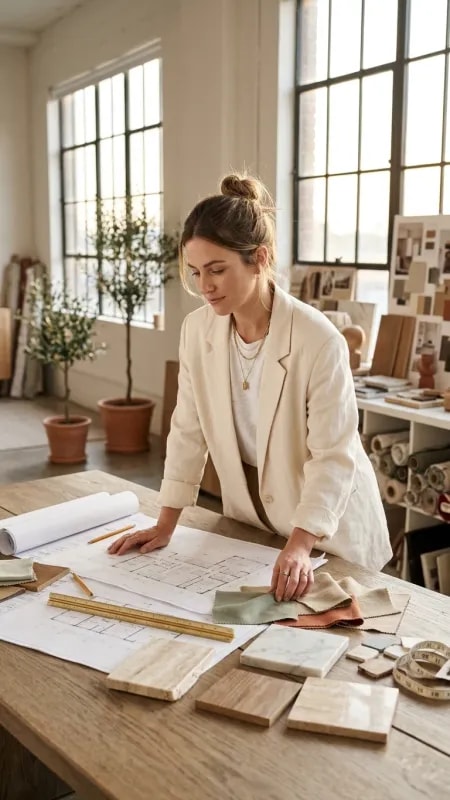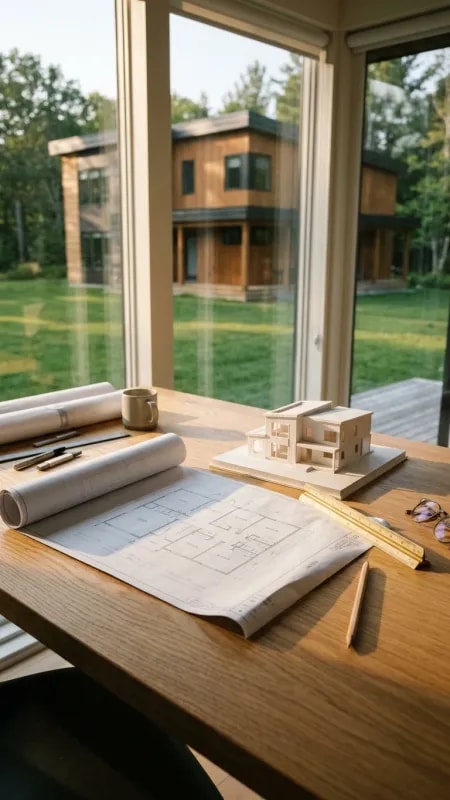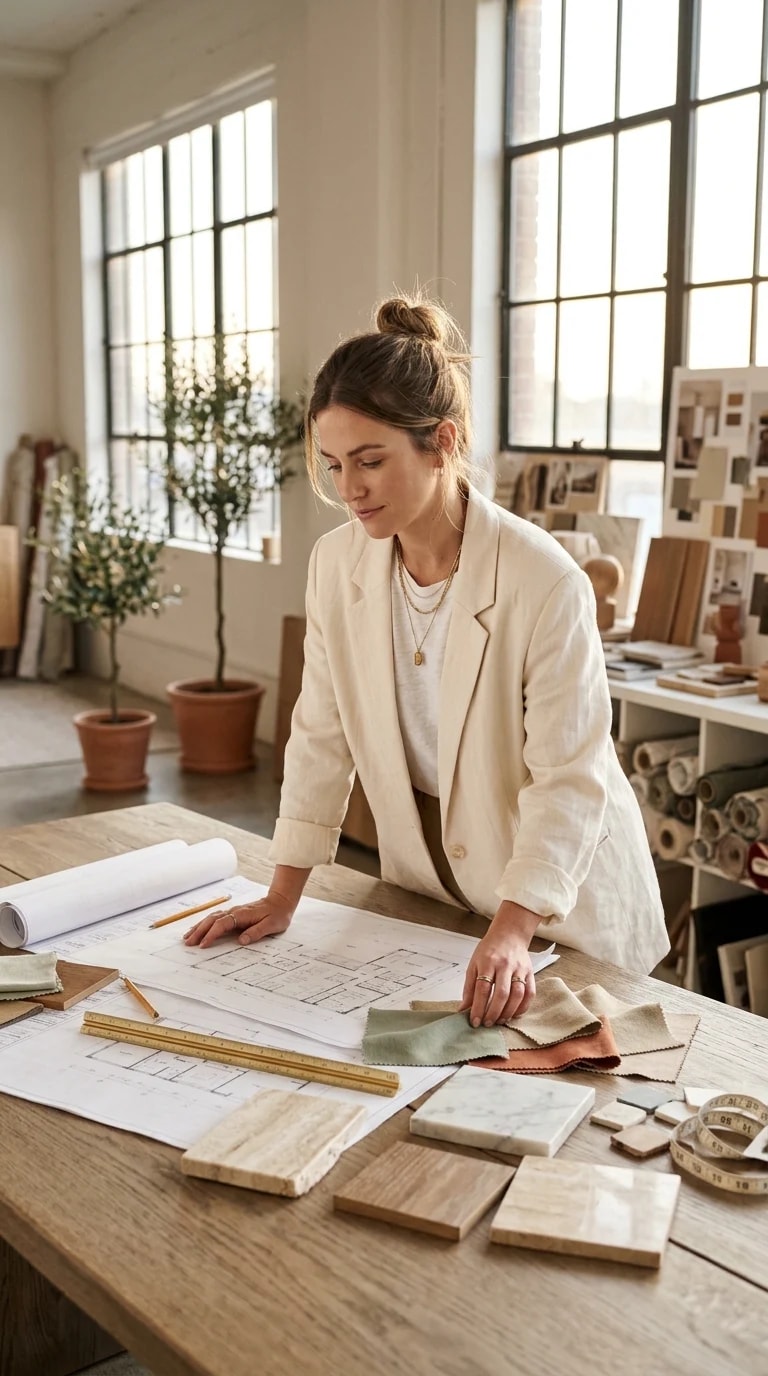
Sunlight falls across a wide wooden table, and the real work of old-style home design is already underway. A designer leans over sprawling blueprints, a wooden ruler within reach, surrounded by the quiet tools of her trade: fabric swatches in cream and terracotta, marble tiles veined like riverbeds, wood samples worn smooth at the edges. In the background, potted olive trees soften the grid of tall industrial windows. Nothing here is digital or hurried. This is where a timeless interior is assembled piece by piece, long before the first nail goes in.
Old-style rooms are built from the material palette outward, not the other way around. The fabrics on that table matter as much as any floor plan: a heavy linen that will crease and fade, a wool the color of dried sage, a strip of marble that catches the light like an old kitchen counter. When you choose these textures first, the architecture follows. Earthy tones — warm cream, baked terracotta, muted green — are not a trend but a vocabulary, one that has furnished farmhouses and townhouses for generations. The goal is a room that looks collected rather than decorated.
The blueprint and the ruler keep the romance honest. Old-style design has always been precise: deep window reveals, generous baseboards, doorways scaled to a human stride. On the table, those details are measured and re-measured, because proportion is what separates a charming room from a fussy one. A wooden ruler is a small thing, but it enforces the discipline that old houses teach — that a room should feel settled, not staged. Draw it, test it, then commit.
Then there is light. The olive trees and gridded windows in the studio are a reminder that old-style interiors are never finished in a vacuum; they are tuned to the daylight that will actually fall on them. South-facing rooms can carry deeper colors and heavier fabrics, while a dim hallway asks for chalky whites and a single warm wood. The designer's table is a rehearsal for all of it — a place to hold a tile against a swatch, to see how a sample behaves as the afternoon shifts.
What emerges from this hands-on process is not a replica of the past but a home that feels effortlessly lived-in. The sample table is where nostalgia becomes practical: where a fabric's weave, a stone's grain, and a room's light are allowed to argue and then agree. Old-style design, done well, is simply this — patient, tactile, and built to be touched.