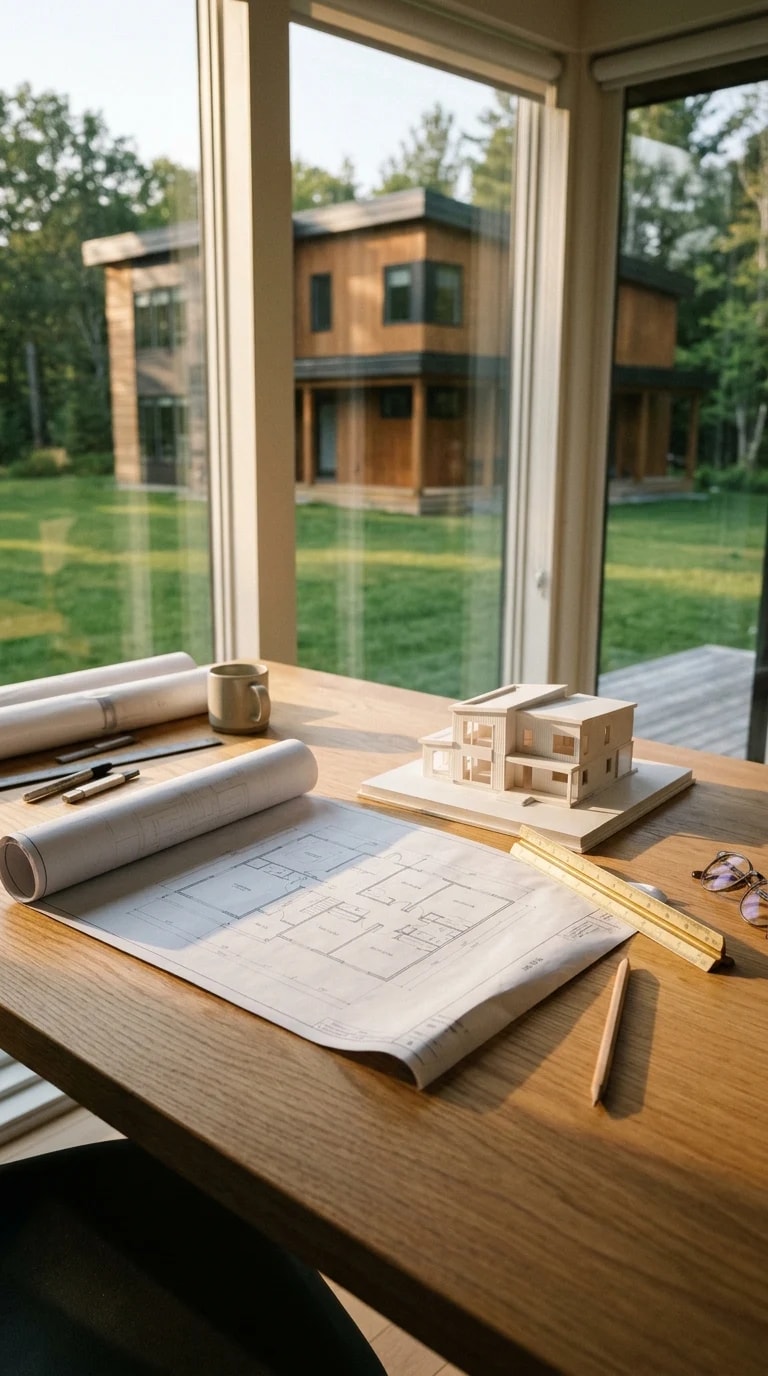
There is a particular hour in the late afternoon when a drafting desk stops being furniture and becomes a kind of instrument. The light comes in low from the left, catching the curl of a rolled blueprint, the flat gleam of a brass ruler, the tiny ridge of a roof on a scale model no longer than a forearm. Everything on the table is warm and slightly worn, and everything on it exists for one purpose: to make a house that has not been built yet feel real enough to argue with.
That is the work nobody photographs. Long before a wall goes up, somebody sits at a table like this and moves a staircase two feet to the left, then moves it back. They redraw the kitchen three times because the morning light lands wrong at the sink. The blueprints on the surface look official, but the stack underneath is the honest record, page after page of adjustments. The scale model matters for the same reason. Held at eye level, it answers questions a floor plan cannot: does the entry feel generous or pinched, does the roofline settle into the trees or fight them, would you actually want to sit on that porch?
What makes this room work is the window. Beyond the glass, the finished house stands in the same golden light that falls across the desk, wood siding a near match for the tabletop, the forest edge holding the lawn like a frame. Indoors, the idea; outdoors, the result. Designing with that view in front of you changes the decisions you make. You start choosing materials that will age well against green, orienting rooms toward the light you can watch moving across a floor, and treating the site as a collaborator rather than a flat white page.
If you are planning a home of your own, borrow the method even if you skip the drafting table. Print the plans large. Build a crude cardboard model and set it on the actual lot. Photograph the site at the hours you will use each room, then bring those photographs back to the drawings. Keep one surface in your house reserved for this work, a place where the project stays visible instead of buried in a laptop folder.
The quiet pleasure in a scene like this is not nostalgia for paper. It is the satisfaction of watching a slow, careful idea step outside and become a place where someone will eventually put the kettle on while the light goes gold.