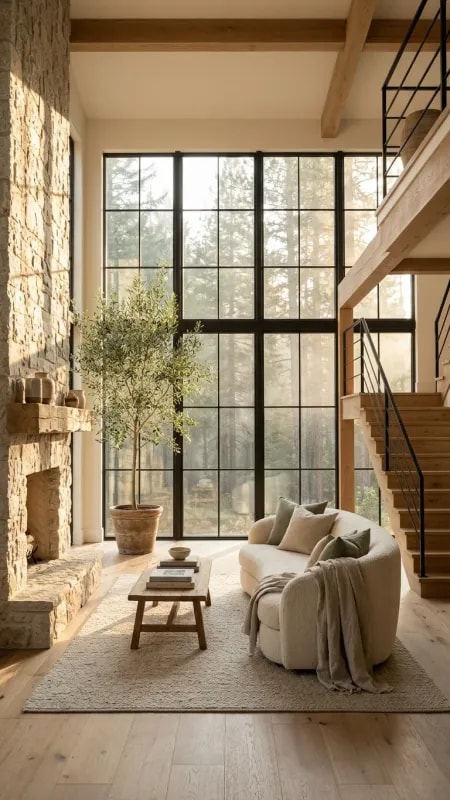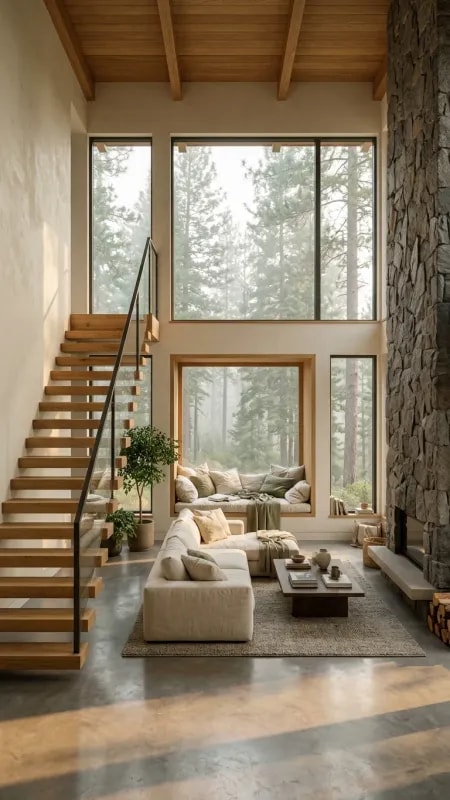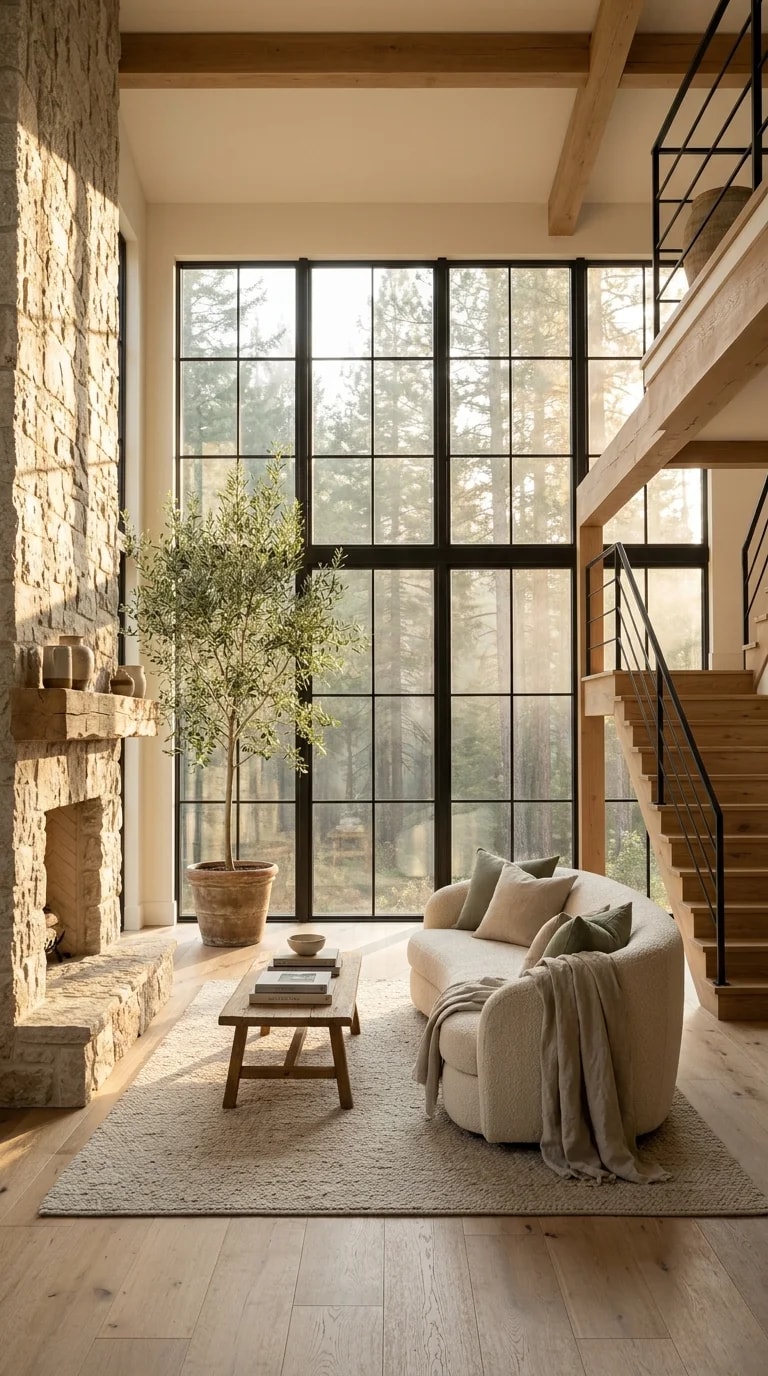
There is a particular kind of calm that only happens when a room stops competing with what is outside it. In this double-height living space, the architecture steps back and lets the forest do the talking. A wall of black-grid glazing runs nearly floor to ceiling, its slim mullions drawing a disciplined grid over a soft, sunlit woodland. The effect is a living room that behaves like a covered porch: sheltered, warm, and completely open to the seasons. Anyone keeping a home design journal should study the restraint here, because almost every decision in the room exists to support that one view.
The window wall is the real structural move. Rather than one uninterrupted sheet of glass, the black steel grid breaks the forest into smaller framed pictures, which makes the scale feel intimate instead of overwhelming. Those dark lines also give the eye something to hold onto in a bright room, a quiet echo of the exposed wood beams overhead. Notice how the ceiling height is met, not fought: the vertical glazing carries the eye up, the beams run across and settle it, and the staircase with its black metal railings repeats the same thin-dark-line rhythm on the opposite side. It is a disciplined conversation between dark and light.
Materials do the grounding work. Pale oak floors keep the floor plan airy, while the massive stone fireplace anchors the room with weight and texture — a rough, ancient counterpoint to all that glass. Against it sits a curved cream sofa, softened by sage pillows and a draped throw that reads as lived-in rather than styled. A low wooden coffee table holds a few books and a shallow bowl, nothing more. The potted olive tree in its terracotta pot is the smartest piece in the room: it repeats the green outside, bridges the threshold, and gives the interior a living scale.
Light is handled with equal care. Sunlight arrives diffused through the trees, so the shadows stay gentle and the palette — cream, beige, stone, honey wood, olive, forest green, black — never turns harsh. A textured neutral rug softens the hard surfaces underfoot and stops the oak from reading as cold. If you want to borrow this approach at home, start with the window treatment and work inward: choose one dark accent repeated three times, keep upholstery lighter than your floors, and add a single large plant rather than many small ones.
The lesson is editorial. Every object here earns its place, and the empty space between them is treated as a material in its own right. Great rooms of this type are not decorated so much as composed, with the landscape given the final word.