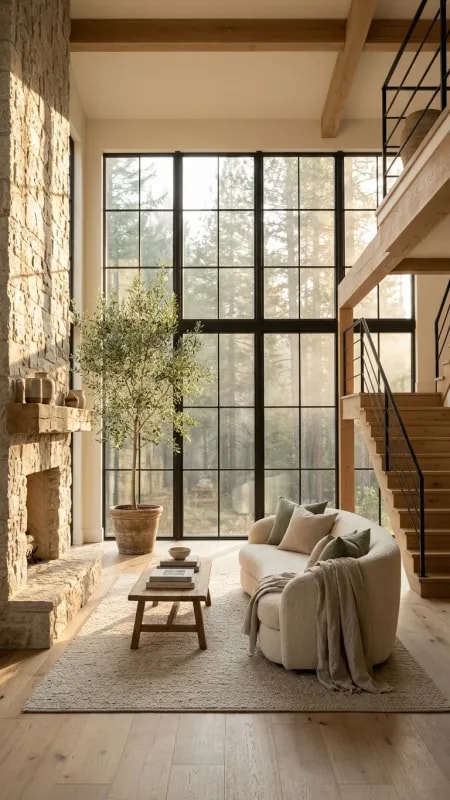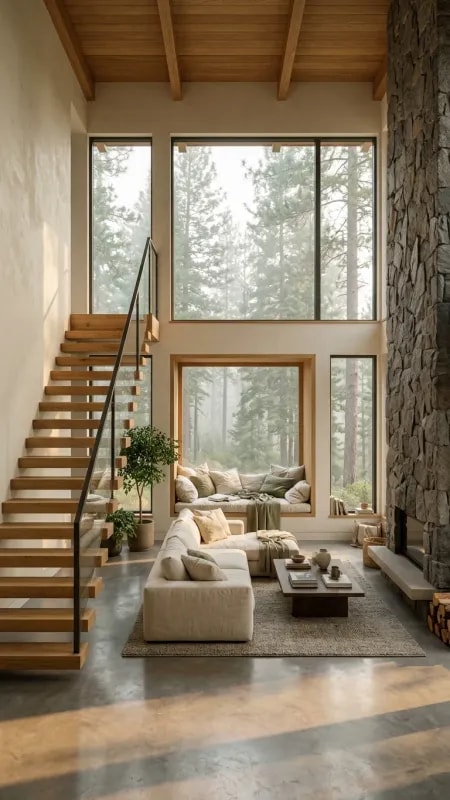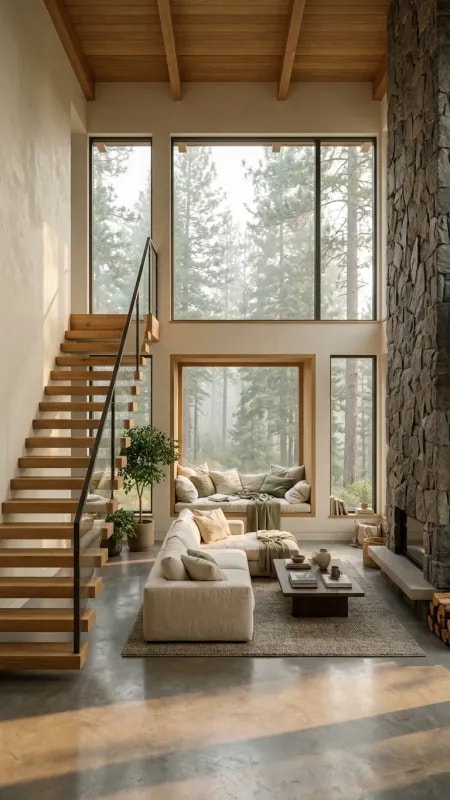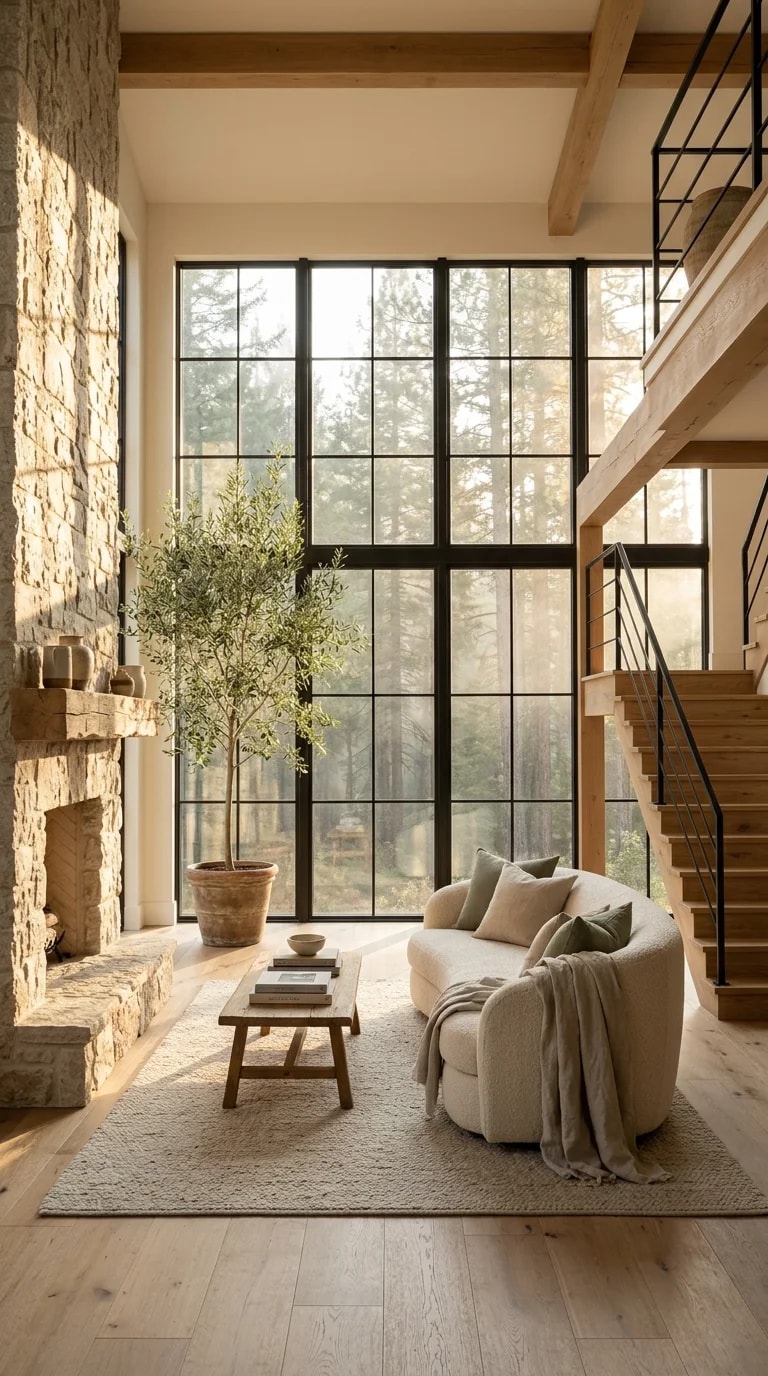
A tall room can feel grand or it can feel like a hug. The difference is rarely about the square footage; it is about where the light lands, what the eye climbs toward, and whether the materials remember the place they came from. In this Kashmiri living room, the ceiling lifts through two storeys, exposed beams ladder upward, and yet nothing about the space feels ceremonial. It feels like somewhere you would take off wet boots and stay a while.
The stone fireplace on the left does the quiet structural work. Kashmir has always built with stone because stone holds heat and answers to weather. Here the chimney breast runs the full height of the wall, gathering the room around it without a single decorative flourish. Around the corner, a wall of black-framed glazing opens the view to dense forest — deodar, fir, the green that gives the valley its particular shade of silence. That pairing matters in a place with long winters: mass to keep the warmth in, glass to keep the outside close. When snow gathers on the sill, the room's two halves talk to each other, fire on one side, forest on the other.
The furniture stays low on purpose. A curved cream sofa, a low wooden table, layered wool textiles — everything crouches so the vertical volume can do its work. The single tall olive tree in its pot is the cleverest move in the room, echoing the ceiling's height in living form and softening the hard geometry of stone and steel. Underfoot, walnut tones and earthy beige keep the palette warm; the dark accents of railing and window frame stop it all from drifting into blandness. This is where Kashmiri craft shows up quietly: the joinery of the staircase, the grain of the beams, the hand of a woven shawl thrown over an arm.
If you are planning a double-height room of your own, borrow the logic rather than the look. Put your heaviest material — stone, rammed earth, a plastered chimney breast — on the coldest wall and let it soak up sun through the day. Keep window frames dark and slim so the forest reads as a picture, not a border. Choose one vertical gesture, whether a tree, a hanging light or a tall bookcase, to guide the eye upward, then leave the rest of the room horizontal and restful. And check your glazing honestly: in a Kashmiri winter, double panes and a sealed frame are not a luxury, they are what makes a glass wall possible at all.
Done well, height stops being impressive and becomes generous. The room breathes, the light moves through it from morning to dusk, and the hills outside stay part of the furniture.