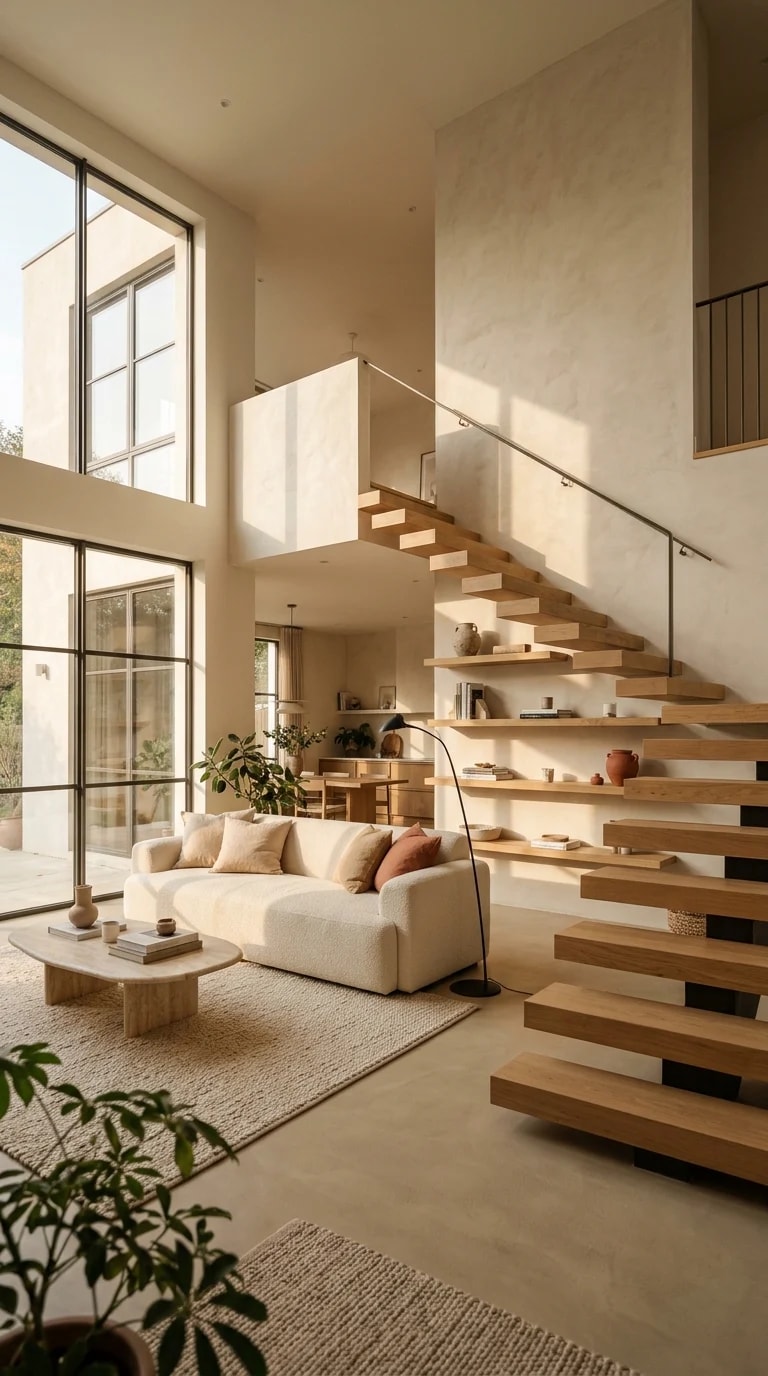
Some rooms announce themselves. This one exhales. A double-height living space opens upward through a floating oak staircase, its treads cantilevered so cleanly they seem to hover against the pale wall. Morning sun cuts through the tall glass doors and lands in sharp geometric shapes across the floor, then softens as it climbs the plaster. The effect is architectural, but the feeling is domestic — the kind of quiet that makes you put your phone face down and stay a while. Nothing in the frame shouts; everything is placed, then left alone.
The palette does most of the emotional work. Cream walls and a sand-toned woven rug set a calm base, while warm oak injects the grain and glow that keep the room from going cold. Terracotta and rust appear only in the cushions and a few ceramic pieces on the open shelves, small warm notes that repeat just enough to read as intentional rather than accidental. A muted green from the plants — a tall one in the foreground, a softer one by the window — completes the scheme without competing with it. It is a restrained mix, and that restraint is what makes it feel expensive.
Furniture is arranged for conversation and slow mornings rather than maximum seating. The curved cream sofa arcs around a low round table stacked with books, and a slender black floor lamp leans in from the side like a pencil mark, the only hard dark line in a soft room. Open shelving holds ceramics and books in loose groupings that look unstyled but are not, and the mezzanine railing above draws the eye up a second time, giving all that vertical space a purpose beyond sheer volume.
The lesson for anyone chasing home design inspiration here is restraint with structure and generosity with light. Keep the big moves simple — one staircase, one rug, one long view out to the garden — then layer texture where hands and eyes actually land. Leave the walls pale so shadows can do the decorating, and resist the urge to fill the upper air. The emptiness above the sofa is not wasted space; it is the luxury.