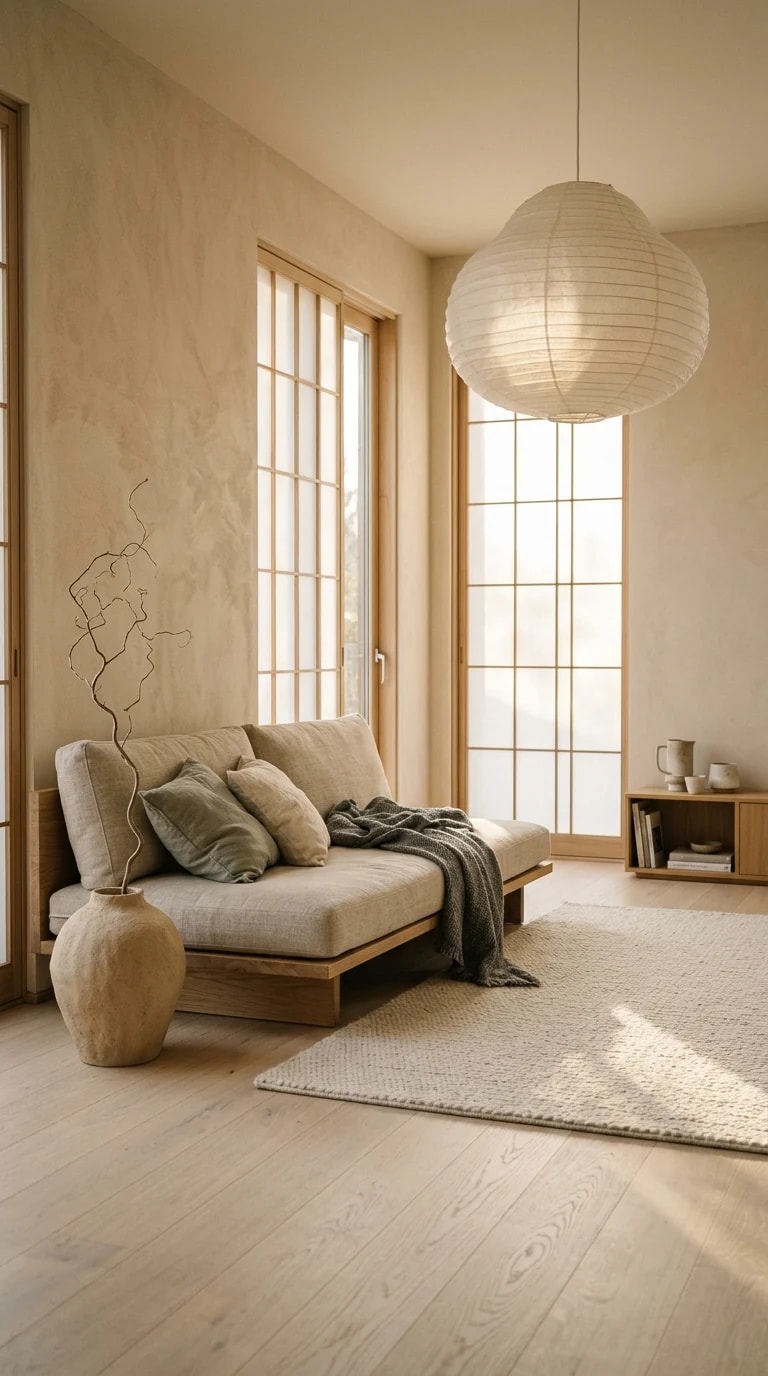
Some rooms ask you to look. This one asks you to stay. A low wooden daybed anchors the left side of the space, layered with oatmeal cushions and a gray throw draped so casually it looks like someone just stood up. Nothing about it is fussy, yet every element has been placed with intent. That balance between ease and precision is the whole promise of Japandi design, and this living room makes the case better than any mood board could.
The architecture does half the work. Shoji-inspired grid windows filter daylight into soft, even bands, so the room is bright without ever feeling exposed. The large ribbed paper lantern pendant echoes those grid lines above, glowing faintly in the afternoon sun and giving the ceiling a focal point without weight. Straight verticals in the photography make the proportions feel honest: pale wood floors, tall window frames, a low seat. High and low, light and shadow, all held in a quiet conversation.
Warm neutrals carry the palette. Oatmeal, cream, sand, and light oak sit beside a muted gray-green and one sculptural ceramic vase holding a single bare branch. That branch matters more than it seems, because it introduces a vertical, organic line into a room built from rectangles. A textured rug grounds the lower half of the composition and softens the hard edge of the wood floor, while a slim shelf at the right holds books and ceramics that read as lived-in rather than styled. The asymmetry is deliberate: daybed and vase on the left, windows and lantern on the right, with open space in between to breathe.
What makes the room restorative is restraint. There is no accent wall, no gallery of frames, no competing pattern. Texture replaces color as the source of interest: the ribbed paper of the lantern, the weave of the rug, the grain of the oak, the matte finish of the ceramic. When you remove visual noise, the senses relax, and small things take on weight. Morning light moving across the floor becomes an event. A cup of tea on the daybed becomes a ritual.
If you want to recreate this feeling at home, start with the floor plan rather than the shopping list. Keep the main seat low, choose one large light fixture instead of several small ones, and let a single branch or stem stand in for a bouquet. Limit yourself to five warm neutrals and add texture wherever you would normally add color. Then leave a stretch of empty floor visible. In a room like this, the empty space is not what is missing. It is the point.