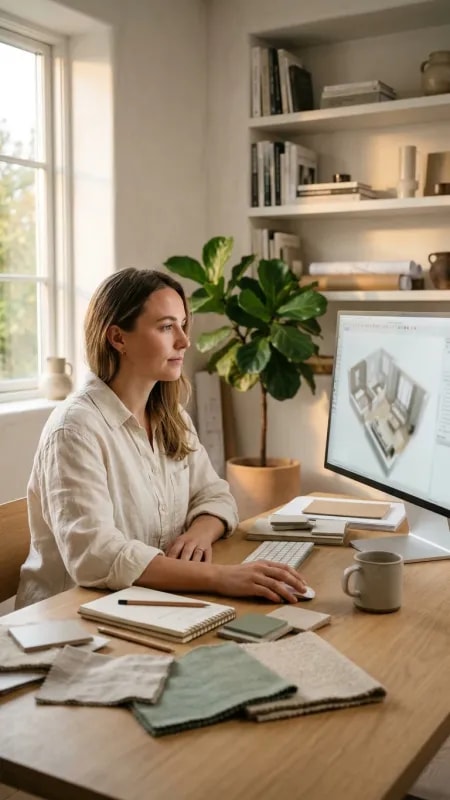
There is a particular kind of afternoon that changes a house: the one where you don't open a single shopping tab. You gather a notebook, a sharpened pencil, a mug of something warm, and the swatches you have been hoarding in a drawer, then settle cross-legged on the window seat with the light coming through the curtains behind you. The room stays as it is. The plan starts to move.
Begin with the outline, not the furniture. Measure the walls and draw them at a small, honest scale — one square equals one foot is plenty — then mark the fixed things first: windows, doors, radiators, the outlet you always trip over. Only after those anchors are on paper do you start placing ideas. Sketching a sofa is easy; discovering it blocks the only walkable path to the kitchen is the whole point of drawing it rather than buying it. Keep the pencil loose. Cross things out. Redraw the same corner three times if that is what it takes to see it clearly.
This is also the moment to test color while the room is still quiet. Lay the sage, terracotta and oatmeal swatches along the edge of the notebook and hold them up against the window light, then against the wall in shadow. Notice how the rust deepens near the wood shelving and how the oatmeal goes soft and almost pink in the afternoon glow. Three colors are usually enough for one room — a dominant neutral, a grounding mid-tone, and one warm accent that earns its place. Write the names down beside your sketch so future you doesn't come home with a fourth green that fights the other three.
Texture deserves the same treatment. Run a hand over the cushions and the throw, then note what is missing: something woven, something smooth, something with a little weight. A room reads as finished when the surfaces disagree with each other in a friendly way — linen against ceramic, wool against glass, trailing eucalyptus leaves against a hard shelf edge. Add these as small scribbles in the margins of the plan; they are reminders, not decoration.
When the page is full, pin it somewhere visible and leave it alone for a week. Good plans settle. You will notice the parts you keep returning to and the parts you have quietly stopped caring about, and that is the editing process doing its work before any money is spent. Then buy the first thing — usually the smallest, cheapest thing on the list — and let the room begin.