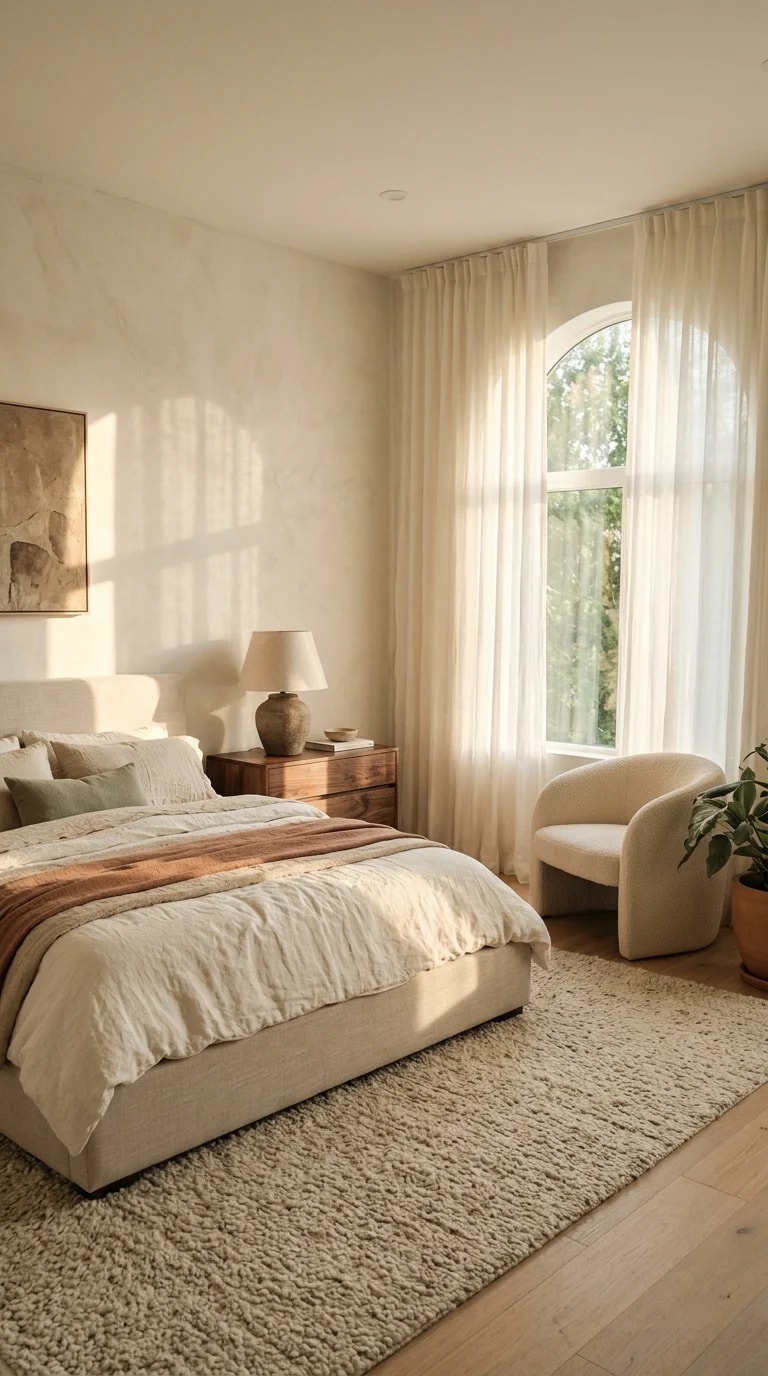
There is a moment in this bedroom, somewhere around mid-morning, when the arched window turns the left wall into a canvas. Sheer curtains soften the light, the shag rug holds it, and long shadows stretch across bare plaster like brushstrokes. Everything else in the room supports that moment: the low upholstered bed in cream and rust, the warm wood nightstand, the single sculptural lamp, the rounded chair angled toward the sun. Nothing competes. The empty wall is not a wall waiting to be decorated. It is the design.
And yet most bedrooms eventually need a screen. This is where the conversation about a home design TV wall usually goes wrong. The reflex is to build: a full media wall, a dark contrasting panel, floating shelves, a strip of backlighting that turns the wall into a glowing billboard after sunset. In a room like this one, that approach doesn't add function, it subtracts atmosphere. The better strategy is to treat the television as a guest rather than a resident, something that blends in, steps back, and lets the architecture keep the lead.
Start with placement and scale. A screen set slightly lower than eye level from the bed, sized for viewing distance rather than for drama, reads as furniture instead of architecture. If the wall allows a shallow recessed niche, use it, and finish the inside in the same limewash or plaster as the surrounding surface so the frame sits in shadow rather than on display. A matte finish is non-negotiable; gloss turns a dark rectangle into a mirror that catches every bit of window light. Where budget permits, a frame-style display that shows muted artwork when idle can hold the wall without shouting, especially if you choose a frame tone that echoes the nightstand timber.
Below the screen, keep it simple: one low console in the same warm wood family as the bedside table, closed doors for cables, and a single object on top. Resist the gallery of shelves. Resist the urge to add lighting behind the panel. The eye should travel, as it does here, to the window and the shadows, not to a bright edge glowing at the end of the bed.
The test of a well-designed TV wall in a bedroom is simple. Step into the room at four in the afternoon, when the sun is low and no screen is on. If the wall still feels quiet, still holds the light, still makes you want to sit in the armchair and do nothing for a while, you got it right. The screen will be there when you need it. The calm should be there the rest of the time.