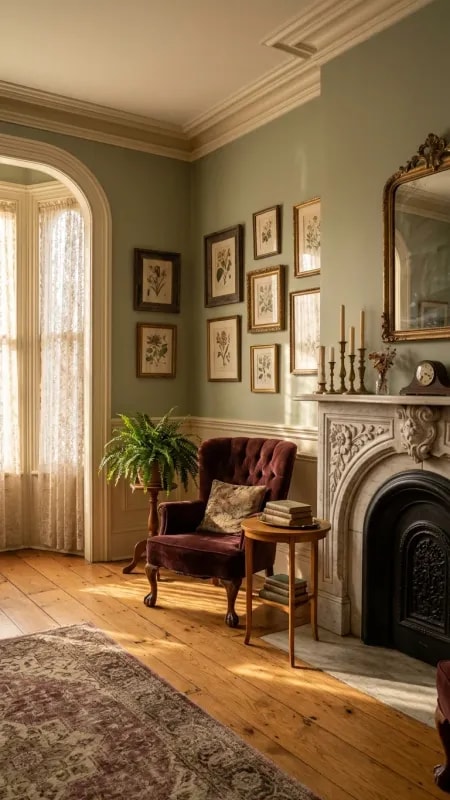
There is a specific hour in the afternoon when a room stops being furniture and starts being a feeling. Light slips through the slats of a blind and lands in stripes across a wall, a shoulder, a chair. Everything in the space goes amber — the cream trim, the dusty rose of an upholstered seat, the deep brown of an old wooden cabinet. If you are planning a dream home, this is the quality worth designing around first, because no amount of square footage recreates it.
Start with the windows and resist the urge to flood every room with flat, even brightness. Sheer linen, wooden slats, a half-drawn shade — these are the tools that turn ordinary daylight into something cinematic. Sheer blinds diffuse light into a soft glow and keep the striped shadows that make a wall interesting at four in the afternoon. If privacy is not a concern, leave a west-facing window unadorned and let the low sun do the decorating. Then place the pieces you love where that light will actually touch them: a reading chair angled toward the glow, a side table that catches the last warmth of the day.
Color is the second half of the equation. Warm earth tones age beautifully together — sepia, clay, faded rose, soft cream, deep espresso wood — because they mimic the way sunlight flatters a surface. Paint a room in a warm off-white rather than a cool one and every golden hour inside it will feel richer. Bring in texture to catch that light: brushed cotton, worn leather, a rattan basket, a wool throw. Gloss fights warm light; matte and woven surfaces absorb it and give it back slowly, which is why a vintage-inspired room feels calm rather than bright.
Then add the objects that carry memory. A rotary phone on a shelf, a patterned wallpaper that repeats a small motif, a radiator painted the same color as the wall — these details read as a life lived rather than a showroom staged. Nostalgia in a dream home does not require a full retro renovation. One or two pieces with history anchor a room and give the eye somewhere to rest.
Build the plan around light first, warmth second, and objects third, and the result is a home that feels less decorated than remembered — the kind of room where you sit still, phone face down, and let the afternoon stretch.