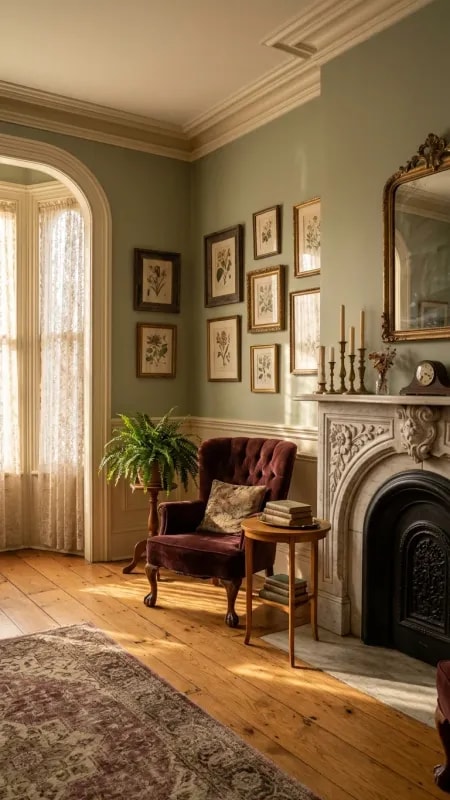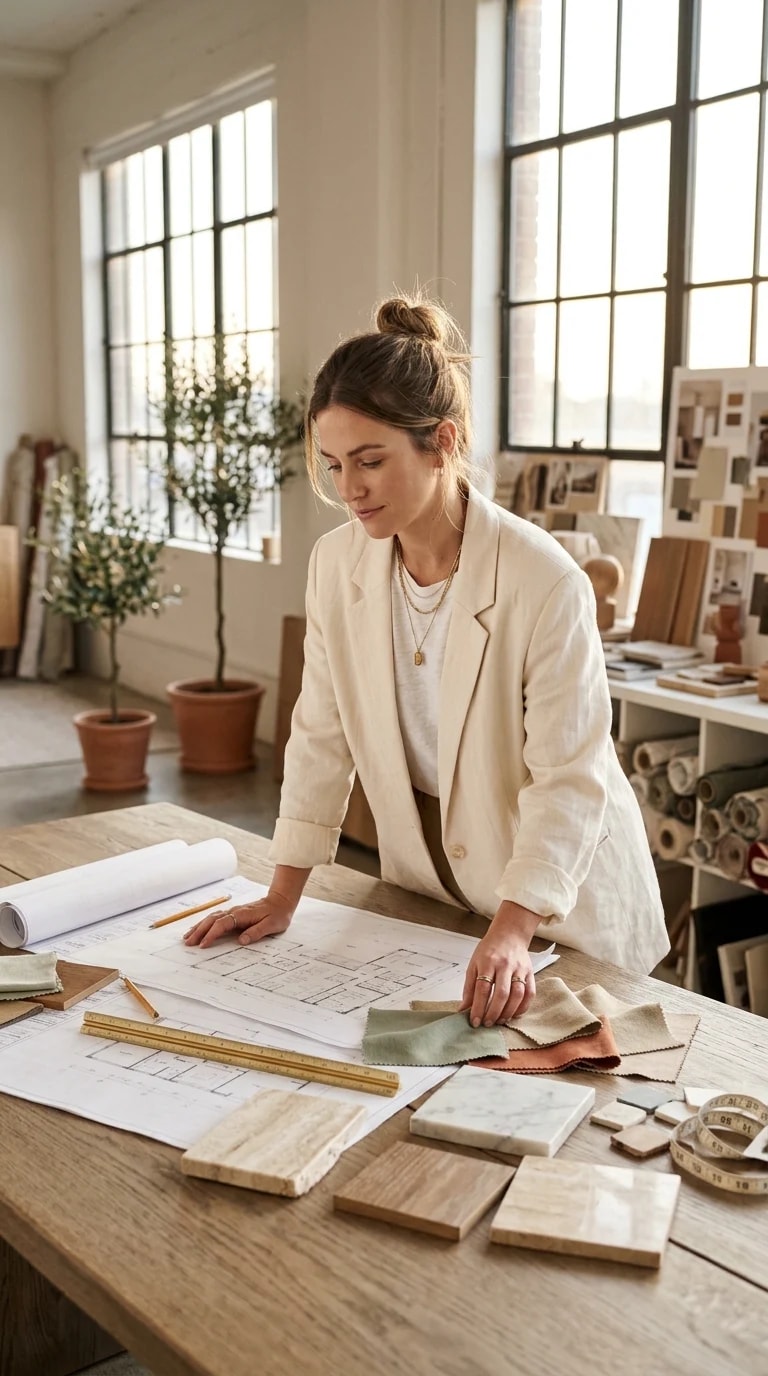
Every classic room you have ever admired started as a mess. Not a styled mess, but a working one: blueprints curling at the corners, a dozen stone tiles fanned out like cards, fabric swatches stacked until the right weight of linen announces itself. The worktable is where home design actually happens, long before anyone hangs a curtain or places a chair.
Watch a designer lean over that table and you see the real method. Her hands move between a ruler and a rolled drawing, then drift to a square of honed limestone, then to a strip of wool. She is not decorating; she is testing physics and memory at once. How will that stone feel underfoot at seven in the morning? Will the cream plaster read warm or gray when the afternoon light shifts? Classic design earns its longevity through this kind of quiet interrogation, sample against sample, until the palette stops arguing with itself.
The setting matters as much as the samples. Notice the olive trees in their pots and the tall industrial windows letting in diffused daylight — the same light the finished rooms will eventually receive. Good designers work in conditions that mimic the homes they are planning, because a beige that looks flat under fluorescents can turn honey-gold beside a west-facing window. Big glazing, muted greens, creams and clay tones: the studio itself becomes a preview of the house, a live swatch of the atmosphere being proposed.
There is also a lesson here for anyone renovating. Classic does not mean cautious, and it certainly does not mean ordering everything from a single catalog page. It means gathering real materials before committing — a physical tile in your hand, a fabric draped over a chair back, a plan drawn at scale and marked up in pencil. Ruler lines and margin notes are not indecision. They are the proof that a room was considered rather than assembled.
The blueprints get rolled up eventually, and the worktable is cleared for the next project. What remains is the discipline of that table: touch the materials, follow the light, and let the plan stay open long enough to improve. That is how a house becomes a dream home — not through one inspired purchase, but through a hundred small, deliberate decisions made with your hands before anything is delivered.