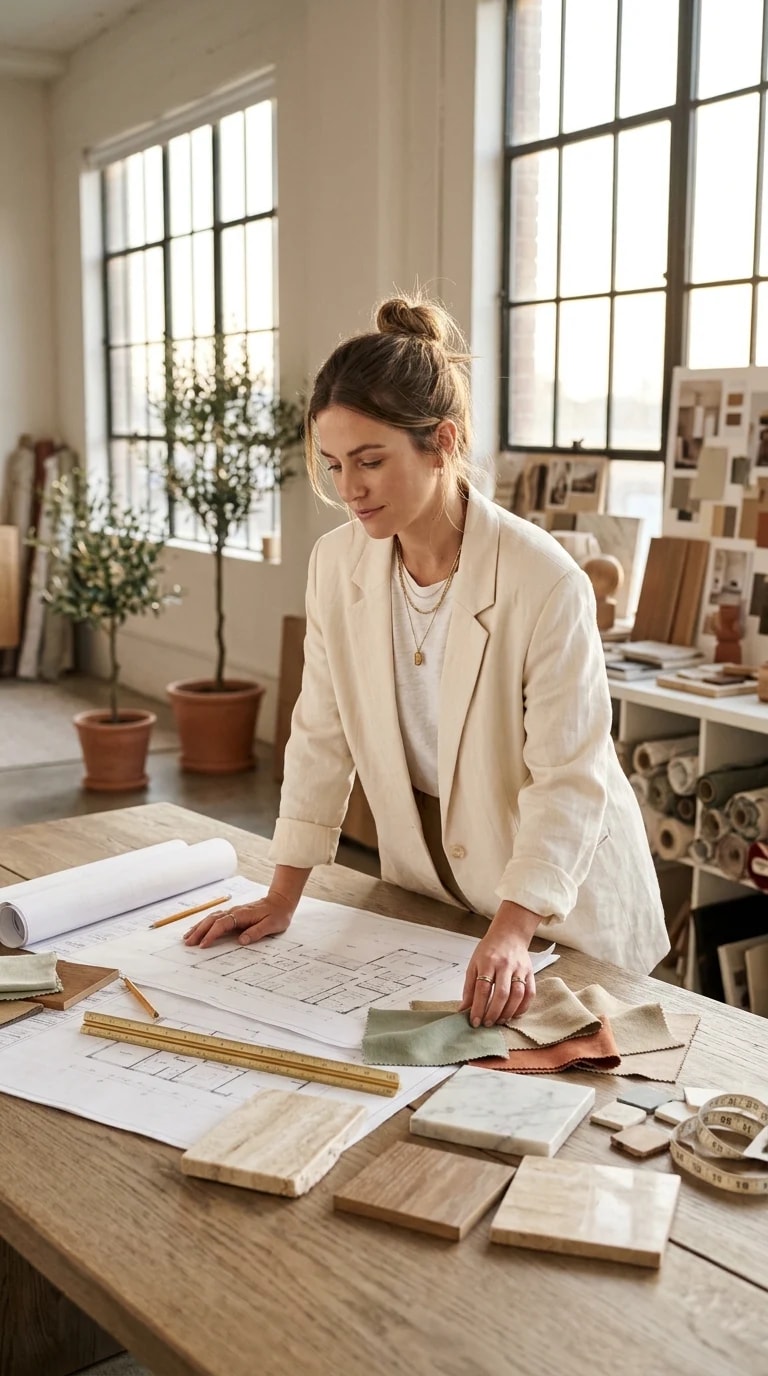
Soft daylight spills across a wide wooden table where a woman in a cream blazer leans over architectural floor plans. Rolled blueprints, a wooden ruler, and fabric swatches in sage and taupe share space with stone and wood tile samples. Potted olive trees frame the scene, and the mood is calm, organized, and deeply creative. This is what dream home planning looks like when it moves off the screen and into your hands—a tactile, patient process of turning vague longings into something you can touch, compare, and refine.
A physical dream home journal makes that process concrete. Start with a sturdy three-ring binder or a large-format sketchbook, then add dividers for rooms, materials, and budgets. Page protectors and pocket folders keep fabric swatches, paint chips, and tile samples from getting lost. The goal is not a perfect scrapbook but a working document you can spread open beside your laptop or carry to showrooms. Print your floor plans at scale and slip them into the binder so you can jot notes in the margins—where the morning light falls, which wall could move, how the kitchen island might shift two feet to improve the flow.
Collect materials that tell you how a room will actually feel. Ask for sample chips of stone and wood, snip corners of upholstery fabric, and tape them directly onto the page beside your notes. Record not just the color but the texture: is the oak wire-brushed or smooth? Does the sage linen read warm or cool under your own lamps? Photograph the samples in your current home at different times of day and add those prints to the journal. Pair each material with a short annotation—source, price per square foot, lead time—so the journal doubles as a practical reference when you start requesting quotes.
Build a simple ritual around the journal. Set aside one evening a week to review samples, sketch elevations, and update your wish list. Keep a dedicated box as a material library, labeled with the room and date, and rotate new finds into the binder as you narrow choices. Over time, the pages become a record of decisions and detours, not just a mood board. The calm focus in that sunlit workspace is available to anyone willing to slow down, pick up a pencil, and let the dream home take shape one swatch at a time.