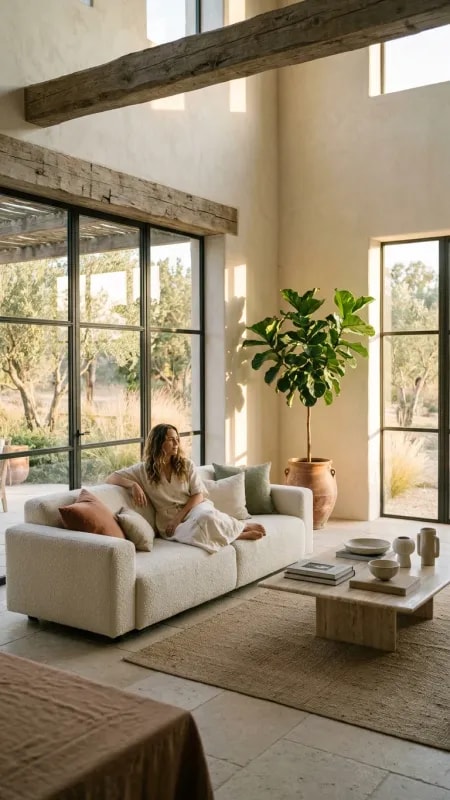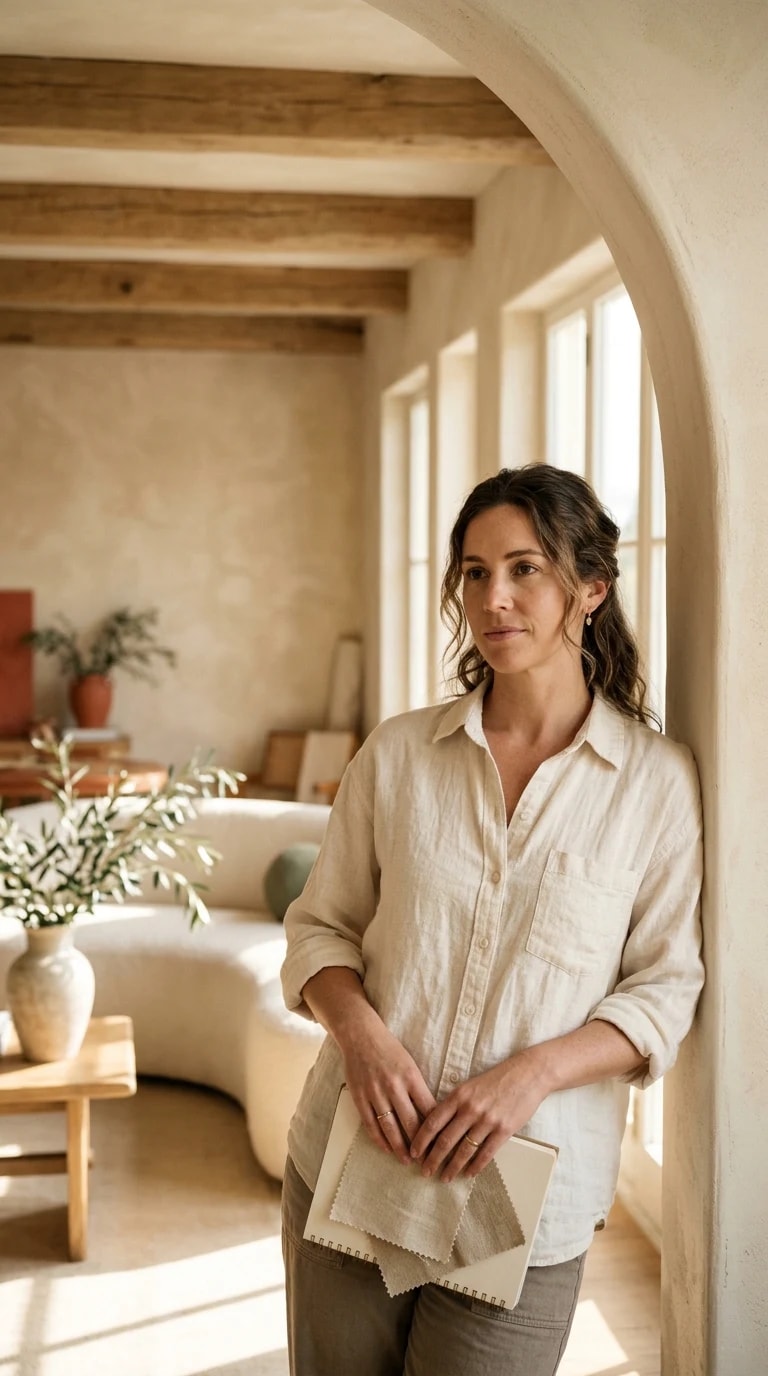
The first view into a home should feel like an exhale. In simple Indian design, that impression is rarely about grand statements. It is about a textured plaster archway that frames the living room like a living painting, drawing the eye past a linen-clad figure holding fabric swatches and into a space where a curved cream sofa, rustic wooden ceiling beams, and a ceramic vase of leafy branches wait in soft focus. This is the front view as an invitation: uncluttered, warm, and deeply rooted in the earth.
The magic lies in materials that age gracefully. Instead of polished marble or glossy laminates, simple Indian homes embrace lime plaster, terracotta, reclaimed wood, and handwoven textiles. The archway itself becomes a quiet hero, its uneven surface catching the afternoon sun and casting gentle shadows that shift through the day. These textures tell a story of craftsmanship and patience, and they ask you to slow down. When you choose local, tactile finishes, the front view gains depth without needing decoration.
Light is the other essential ingredient. In the image, warm sunlight streams through side windows, highlighting a palette of beige, muted green, and soft terracotta. Simple Indian design prioritizes cross-ventilation and daylight over artificial brightness. Sheer curtains, open doorways, and minimal window treatments allow the sun to paint the walls. The result is an interior that feels airy even in small spaces, and a front view that glows from within rather than shouting for attention.
Then come the quiet details: a stack of neutral fabric swatches, a single ceramic vase, a low wooden stool. Simplicity is not emptiness; it is editing. By keeping the palette tight and the furniture low-slung and curved, the room stays flexible for daily life—morning tea, afternoon reading, evening conversations. The front view becomes a reflection of how you actually live: grounded, unhurried, and open to the seasons.
Ultimately, simple Indian home design is less a style than a mindset. It asks you to choose fewer things, but better ones—materials that breathe, forms that welcome, and a layout that lets the front view unfold naturally. Whether you are building new or refreshing a single archway, start with texture, light, and a calm palette. The result is a home that feels like a deep breath every time you walk through the door.