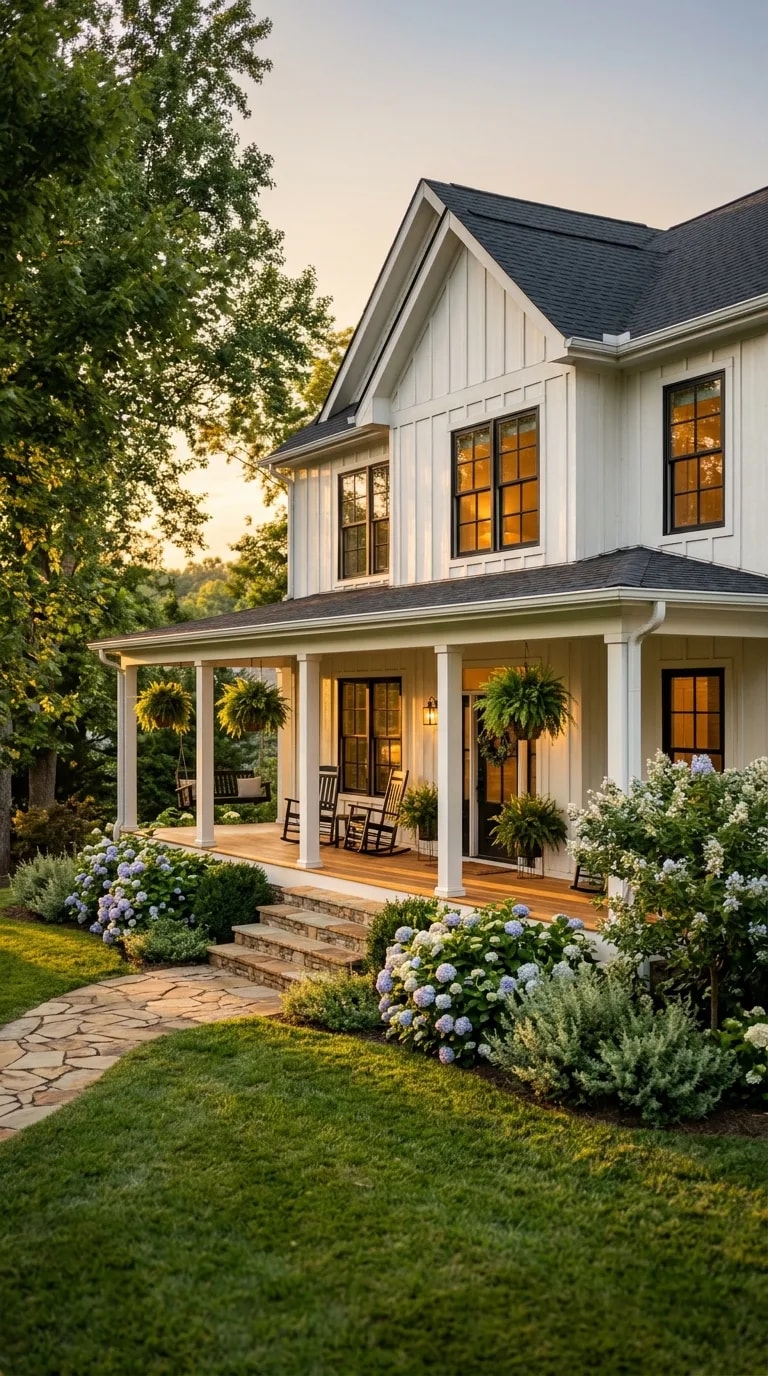
The house in this image earns its charm from restraint. Vertical board-and-batten siding in a clean white runs uninterrupted from the foundation to the roofline, and that vertical rhythm does something quietly important: it stretches a two-story facade upward, making the house feel taller and more graceful than its footprint suggests. Against all that brightness, a charcoal roof and black-framed windows provide the contrast that keeps white siding from reading flat. If you are borrowing this approach, treat the trim, window frames, and roof as a single dark family and let the siding do the talking.
The covered porch is the real heart of the design, and it is generous without being showy. White columns support a deep overhang that shades the front wall and softens the transition between indoors and out. Wooden decking underfoot warms up the palette in a way composite boards rarely match, and the rocking chairs and hanging ferns turn square footage into an actual room. When planning your own porch, aim for at least eight feet of depth. Anything shallower seats two people awkwardly; anything deeper becomes the spot where everyone lingers until the light fades.
The approach matters as much as the architecture. A flagstone path curves in from the lower left rather than marching straight to the door, which slows your pace and lets the landscaping unfold in stages. Stone steps rise to the porch with weight and permanence, while soft blue hydrangeas and clipped shrubs blur the hard line where the house meets the lawn. Mature trees framing one side give the composition a sense of age, the thing new builds most often lack. Plant something with height near the corner of the house and let it grow into the frame.
Material discipline is what separates a considered exterior from a busy one. This house relies on essentially four notes: white siding, dark metal and asphalt, warm wood, and green. Black window frames repeat at every opening, so the eye reads a pattern instead of a collection of details. Resist the urge to add a third siding material or a contrasting garage door. Fewer decisions, repeated confidently, always look more expensive than many decisions made once.
Finally, notice the light. Golden hour washes the facade from the side, glowing softly in the glass and casting long, gentle shadows across the batten seams. That effect is not accidental; a porch deep enough to shade the wall keeps the windows reflective during the day, and warm interior lighting does the rest after sunset. Choose a paint with a satin or low-sheen finish so the boards catch light without glare, and keep the white consistent across siding, columns, and railings. Consistency is what makes a simple palette feel calm, welcoming, and quietly expensive.