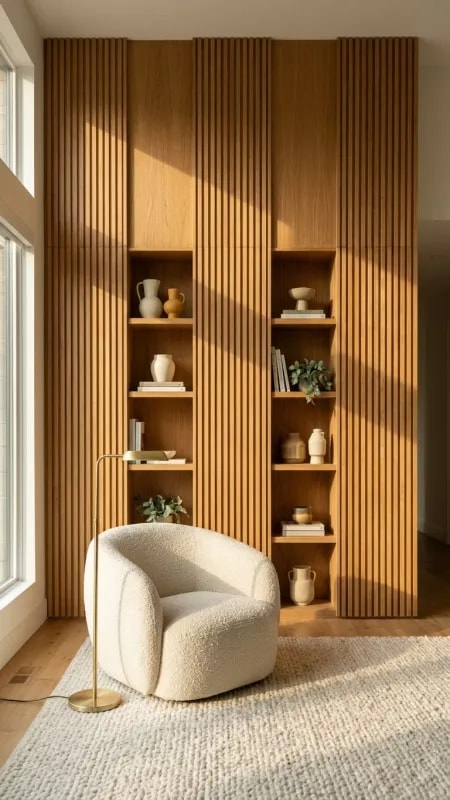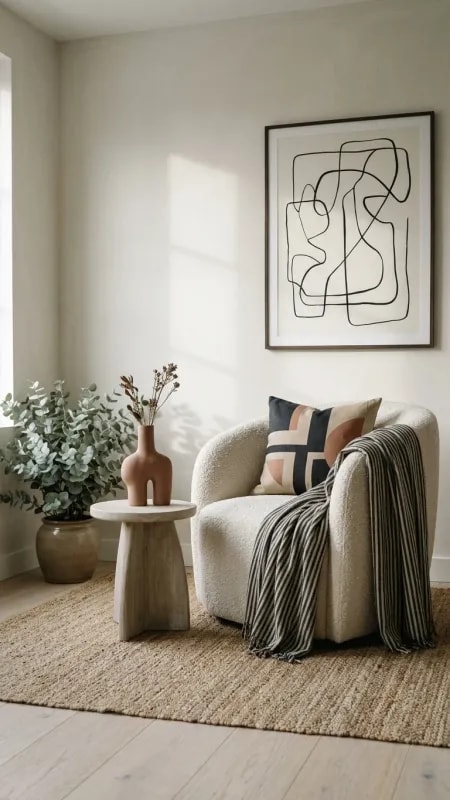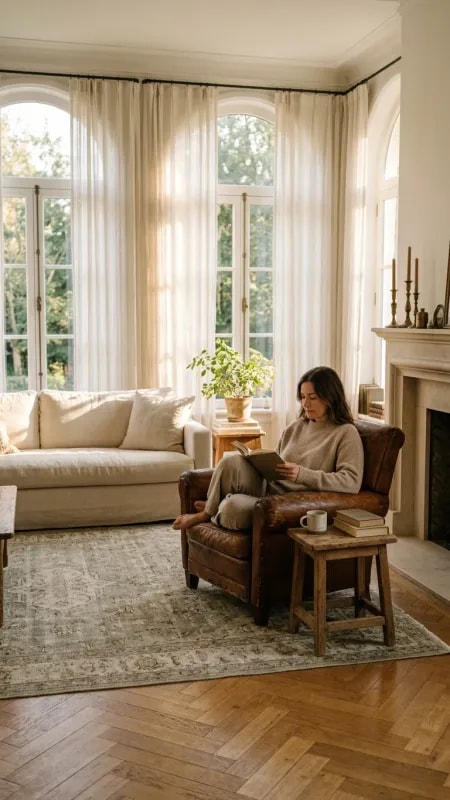
Most people start a home design journal by sketching sofas they cannot afford. A better first page is a record of light. Before you move a single chair, notice where the sun lands at eight in the morning, how a pale wall turns the color of cream at noon, and when the tall windows on one side of a room begin to throw long, soft shadows across the floor. A woman standing in a bright room, glancing back over her shoulder, is usually standing in exactly that kind of light — the kind that makes a plain cotton shirt look expensive and a simple plaster wall look finished.
Write down what you actually see, not what a catalog told you to want. Three lines are enough: the time, the direction of the light, and the mood it created. Morning light through east-facing glass tends to be crisp and slightly cool, good for a desk or a coffee corner. Afternoon light is warmer and heavier, which flatters wood, linen, and any wall painted in beige or soft gray. If a room only feels alive for forty minutes a day, that is not a flaw in the room. It is information, and your journal is where it lives.
Once you have two weeks of entries, patterns appear that no mood board would ever surface. You may find that you keep gravitating toward the same corner at the same hour, or that a hallway you ignore at night is the calmest place in the house at seven in the morning. That is how a palette gets decided honestly: cream, warm white, pale gray, a hint of green from whatever plant survives your attention. Neutrals are not a style choice so much as a decision to let the changing daylight do the decorating for you.
A journal also keeps you from over-furnishing. When you can see in writing that a room already works at its best in soft, filtered light, the urge to add a rug, a gallery wall, and a second lamp starts to fade. You begin editing instead of accumulating. Photograph the empty corner. Tape in the paint chip. Note the lens you used and how shallow the focus was, because a blurry background is often the most accurate record of how a room actually feels.
Keep the book somewhere you pass daily, and let it stay messy. Dates, small sketches, a swatch of fabric, a sentence about how the light made you feel welcome in your own home. Over a year it becomes something rarer than a design file: a portrait of how you live, taken one quiet morning at a time.