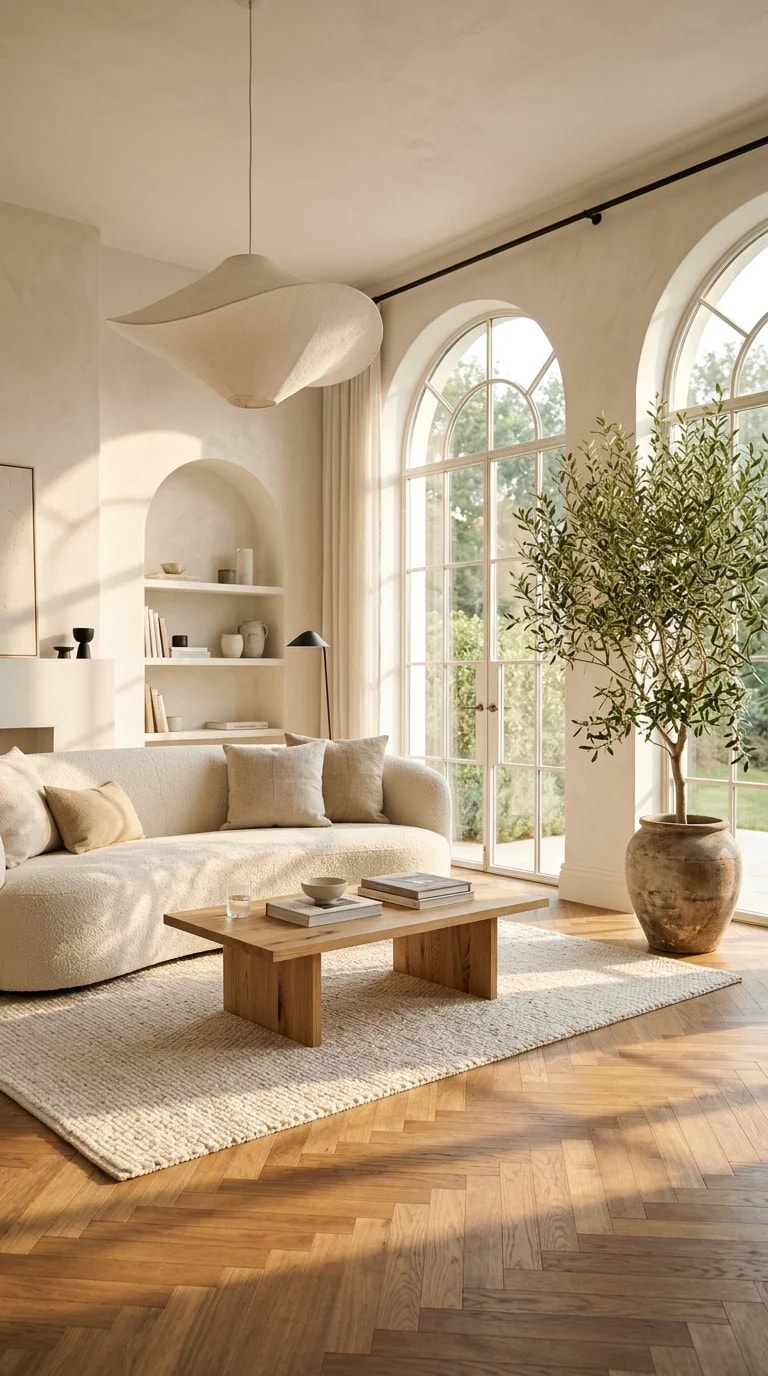
Look at this sun-drenched living room: a curved cream sofa, a potted olive tree, arched windows, and a herringbone wood floor. It feels peaceful and full of possibility—exactly the kind of space that can spark a child's imagination. When you ask a kid to draw their dream home, they don't need fancy supplies. They need a starting point. Use this image as a conversation starter: What would you add? A giant slide? A wall of books? A window seat for a cat? Suddenly, the drawing becomes a story.
Start with simple shapes. Ask your child to draw a big rectangle for the room, then add a few squares for windows. The curved sofa in the photo can be drawn as a soft, wavy line—no need for perfect perspective. Encourage them to fill the room with what they love: a basket of toys, a plant in a funny pot, a rug with crazy patterns. The warm beige and green palette from the image is a great guide: use soft yellows for sunlight, greens for plants, and browns for wood. Let them choose their own colors, though—a purple sofa is perfectly fine.
Expand the idea beyond living rooms. What does a dream bedroom look like? Maybe a bunk bed with a slide, or a ceiling painted like the night sky. How about a treehouse with a rope ladder, or an underwater home with round windows? The arched windows in the photo can inspire castle-like shapes or even a spaceship's portholes. Show kids how to use basic shapes: circles for clocks and bowls, triangles for roofs, rectangles for doors. The herringbone floor pattern is a fun challenge—draw short diagonal lines in a row.
Finally, keep it playful. Ask questions like "Where would you put the snack table?" or "What's hiding behind that plant?" Display their drawings on the fridge or create a "dream home gallery" wall. Praise their effort and details, not just the result. The goal isn't a perfect picture—it's the joy of imagining a space that feels safe and bright. Just like this living room, their drawings can be a calm, inspiring place to dream.