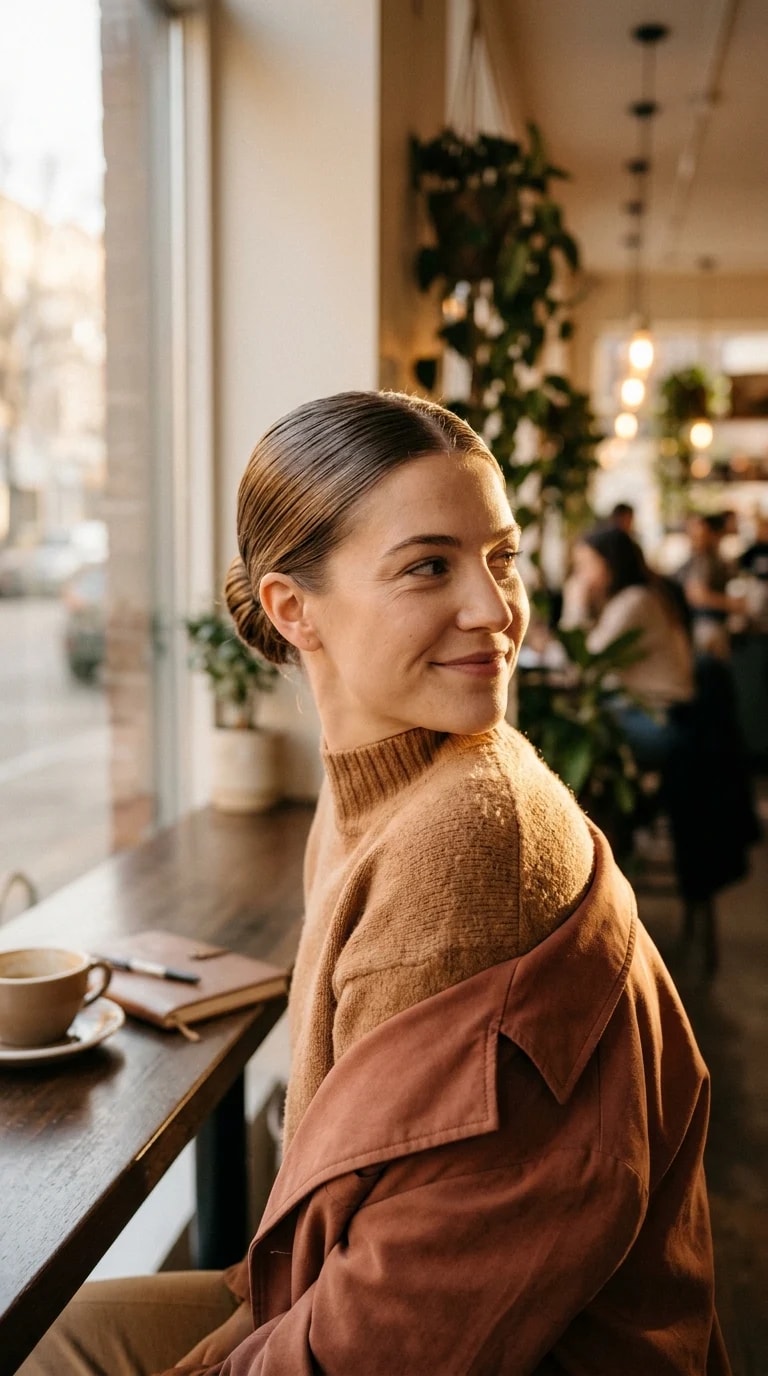
There is a particular kind of corner that makes you slow down: a wooden counter, a ceramic cup with a thumbprint glaze, hanging greenery catching the edge of the window, and a woman in a camel ribbed turtleneck with a rust coat slipped over her shoulders. Nothing in the frame is expensive-looking in an obvious way. Everything is warm, matte, and quietly deliberate. When people ask what to call that feeling at home, they usually reach for vague words like cozy or rustic. The vocabulary exists, though, and knowing a handful of style names makes the difference between a mood board that drifts and a room that actually lands.
The first name worth learning is warm minimalism. It borrows the discipline of minimalism — clear surfaces, few objects, one strong silhouette — but swaps out the cold finishes for tactile ones. Instead of glossy lacquer and chrome, you get oiled oak, ribbed knit throws, unglazed stoneware, linen with a visible weave. The rule is simple: subtract the quantity, add the texture. That camel turtleneck is the wardrobe version of the same idea, a single piece doing the work of five because the material has something to say.
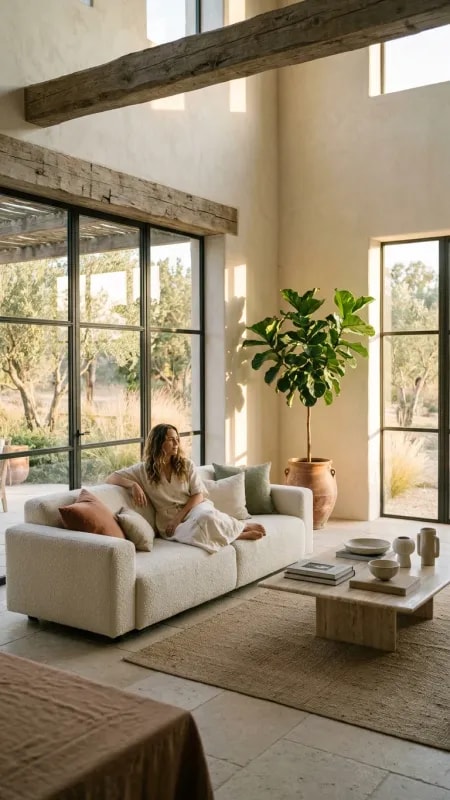
Earthy modern is the second label, and it describes the palette more than the furniture. Think terracotta and clay, cream and bone, ochre, mushroom, muted olive. It is warmer and more grounded than Scandinavian white, and far more restrained than bohemian. Where bohemian layers pattern on pattern, earthy modern limits itself to two or three tones and lets the light do the decorating. If you are drawn to that rust coat against soft brown wood, this is the name to search when you are hunting paint colors and textile swatches.
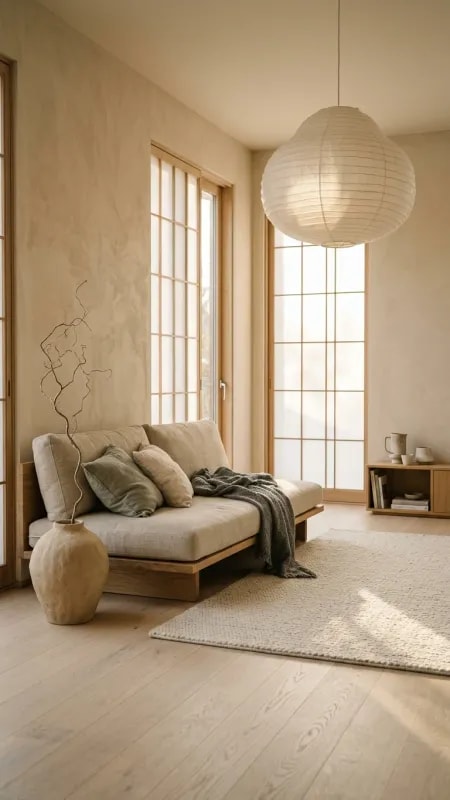
Then there is Japandi, the meeting of Japanese restraint and Scandinavian comfort, which explains the low profiles, the visible grain and the sense that every object was chosen slowly. Organic modern sits close by, softening clean lines with curved edges, plaster finishes and greenery. The blurred window with its trailing plants is pure organic modern. So is the pendant light: warm, dimmable, hung low enough to feel like a glow rather than a fixture.
You do not need to pick one name and pledge loyalty to it. Most good rooms are a blend, and designers often use two: one for the palette, one for the mood. Call yours earthy modern in color and warm minimalism in composition, then test every purchase against the café rule — would this look right beside a ceramic cup and a leather notebook at four in the afternoon, when the light turns gold? If yes, it belongs. If it fights the light, it does not.